


Valuation Methods Confusion: SDE vs. EBITDA by Business Size
Valuation methods confusion is one of the first problems sellers run into, and it can throw off your price before you ever go to market. Owners hear SDE, EBITDA, multiples, and revenue tiers all the time, but many still don’t know which method fits their business size.
That matters because the wrong metric can make a good business look overpriced, underpriced, or hard to compare. In most small owner-operated companies, SDE is the starting point. As revenue grows and the business depends less on one owner, EBITDA usually becomes the better measure, and the multiple often rises with it. If you want a clearer baseline before testing the market, a professional valuation for exit planning can help you anchor expectations to real buyer logic.
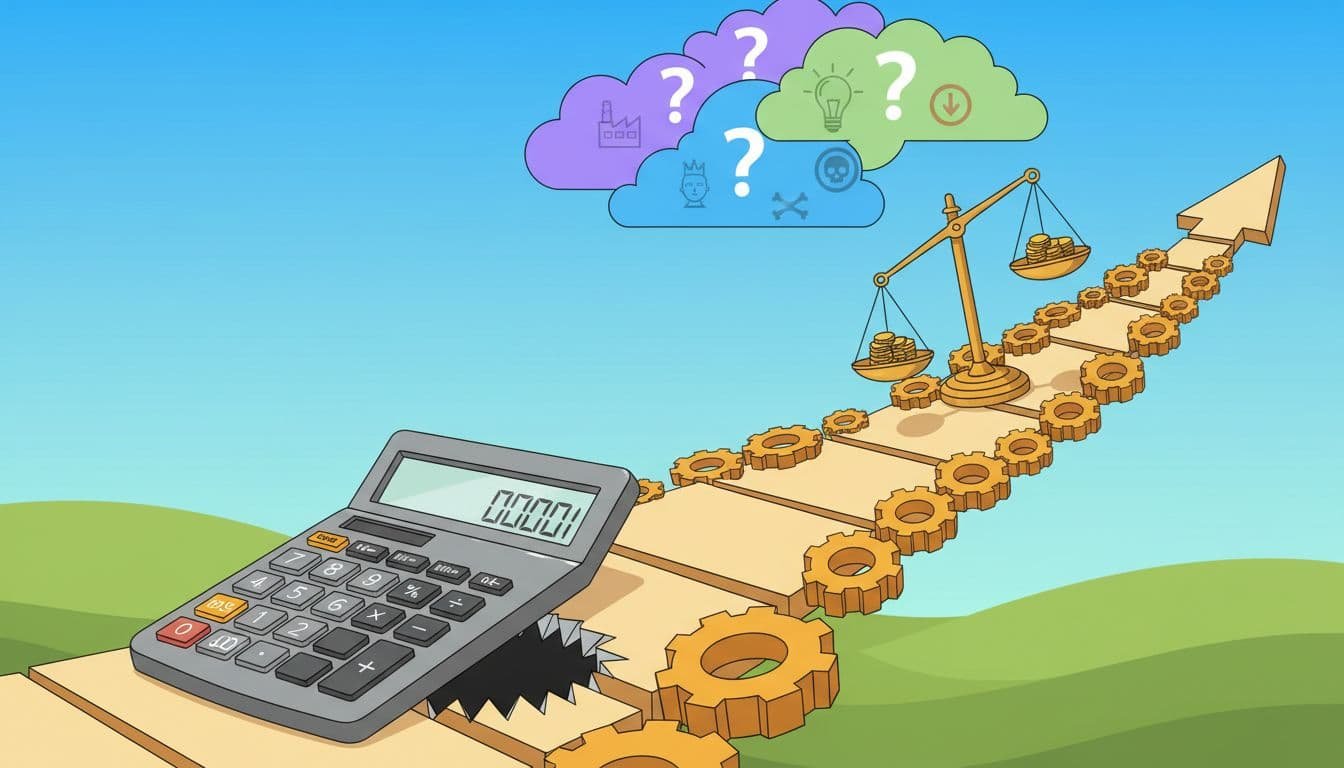
The big idea is simple: business size creates a staircase effect. As sales and scale go up, the earnings method and the valuation multiple often step up too. The sections that follow make that staircase easy to read, so you can understand where your business fits and price it with more confidence.
Start with the two valuation methods that matter most
A lot of valuation methods confusion clears up once you focus on just two earnings measures: SDE and EBITDA. Buyers, lenders, and brokers use both, but they do not mean the same thing, and they do not fit the same kind of business.
The key is simple. SDE usually fits small, owner-led companies, while EBITDA fits larger businesses with real management in place. Once you know which lane your company belongs in, the multiple starts to make much more sense.
What SDE really means for an owner-operated business
Seller’s Discretionary Earnings (SDE) is the total financial benefit one working owner gets from the business. It starts with net profit, then adds back expenses that a new owner may not keep or may handle differently.
In plain terms, SDE usually adds back:
- the owner’s salary
- personal perks run through the business
- one-time or unusual costs
- interest
- taxes
- depreciation
- amortization
That makes SDE useful when the owner is still the engine of the company. If you handle sales, manage staff, solve problems, and keep daily operations moving, a buyer is often valuing both the business and the job you perform inside it.
For that reason, SDE is usually the better method for Main Street businesses and many companies under the lower revenue tiers of the staircase. The buyer often expects to step into your role, at least for a while. So the valuation needs to capture the full cash flow available to that working owner, not just the profit left after paying you a salary.
If you’re still cleaning up add-backs before a sale, a solid business sale preparation process can help you separate true earnings from expenses that won’t carry over.
What EBITDA shows in a more professionally run company
EBITDA means earnings before interest, taxes, depreciation, and amortization. It measures operating profit, but it does not add back the owner’s full compensation the way SDE does.
That difference matters. EBITDA assumes the business can run with hired management and that leadership should be paid a market-rate salary. In other words, the company is no longer priced as “buying a business plus taking the owner’s seat every day.” It is priced more as an operating company that can stand on its own.

This is why EBITDA shows up more often in larger companies. Those businesses usually have systems, department heads, cleaner reporting, and less dependence on one person. A buyer can picture the company continuing after the owner leaves, which lowers risk and often supports a higher multiple.
The more transferable the business is, the more likely EBITDA becomes the right lens.
That shift often starts around the middle of the staircase, where a business is growing out of owner-dependence and into professional management. At that point, valuation methods confusion often comes from comparing an SDE-based company to an EBITDA-based company as if they were measured the same way. They are not.
Why a lower SDE multiple does not always mean a lower value
This is one of the most common mistakes sellers make. They see a business valued at 2.5x SDE and another at 5x EBITDA, then assume the EBITDA business must be worth much more. The math is not that simple.
SDE is often a bigger earnings number because it adds back the owner’s salary and perks. EBITDA is usually a smaller, cleaner operating earnings number because it assumes management pay stays in the business. So the multiple is only half the story. The earnings base matters just as much.
A quick comparison makes this easier to see:
| Method | Earnings figure | Example multiple | Implied value |
|---|---|---|---|
| SDE | $400,000 | 2.75x | $1,100,000 |
| EBITDA | $250,000 | 4.4x | $1,100,000 |
In this example, the EBITDA multiple looks much higher. Still, the final value is the same because EBITDA is applied to a smaller earnings figure.
So when used correctly, SDE and EBITDA can lead to a similar dollar value. What matters most is choosing the method that matches the way the business actually runs. If the owner is central to daily operations, SDE usually tells the story better. If the company runs with hired leadership, EBITDA usually gives buyers a clearer view.
Use the staircase effect to match valuation method to business size
A lot of valuation methods confusion goes away once you stop comparing every business by the same yardstick. Size changes buyer behavior. It also changes risk, financing, and what kind of role the buyer expects to step into after closing.
That is why valuation works like a staircase, not a flat line. As revenue rises, buyers usually move from SDE to EBITDA, and the multiple often rises with that shift. The key is to match the method to the way the business actually runs.
Under $500K to $1M in revenue, why SDE is usually the right tool
At the smallest end of the market, most businesses are still owner-run. The owner sells, manages people, solves daily issues, and often keeps customer relationships together. In that setup, a buyer is not just buying cash flow. They are often buying a business and a job.
That is why SDE is usually the right tool for very small Main Street companies. It captures the total benefit available to one working owner, which is the question most buyers in this size range care about most.
In practical terms, the staircase usually looks like this:
| Revenue size | Best-fit metric | Typical multiple |
|---|---|---|
| Under $500K | SDE | 1.5x to 2.0x |
| $500K to $1M | SDE | 2.0x to 3.0x |
These are common ranges, not fixed rules. A clean, steady business with repeat customers may land higher. A company with messy books, heavy owner dependence, or uneven sales may fall lower.

At this size, the buyer pool is also smaller. Many buyers are first-time acquirers, owner-operators, or SBA-minded individuals. Because of that, buyers focus hard on transfer risk. If the business slows down when the owner steps away, the multiple usually reflects that risk right away.
A few factors shape the range most:
- How much the owner handles day to day
- How clean and believable the financials are
- Whether staff, vendors, and customers are likely to stay
- How easy the business is to hand off to the next owner
If your company falls in this band, SDE is usually the cleaner lens. Trying to force an EBITDA view onto a tiny owner-led business often creates more valuation methods confusion, not less.
At $1M to $2M in revenue, where the SDE to EBITDA crossover starts
This is the gray zone. Some businesses at this level still revolve around one owner. Others already have a manager, department leads, stronger systems, and cleaner reporting. That is why either SDE or EBITDA may be used here, depending on the facts.
The common range in this band is often roughly 3.0x to 4.0x, using either SDE or EBITDA. The problem is not the range itself. The problem is that owners compare deals without checking whether the earnings metric is the same.
Two businesses can have similar values and very different multiples if one is priced on SDE and the other on EBITDA.
That mistake happens all the time. An owner sees a 4.0x EBITDA deal and assumes their 3.2x SDE multiple is weak. But those are not apples-to-apples comparisons. SDE is usually a larger earnings figure because it adds back the owner’s compensation and perks. EBITDA is tighter and assumes management pay stays in the business.
So what decides the crossover? Usually, it comes down to three things:
- Owner dependence: If you still drive sales, key relationships, and daily decisions, SDE often fits better.
- Management depth: If the company has people who can run major functions without you, EBITDA starts to make more sense.
- Financial quality: Strong monthly reporting and documented add-backs make buyers more comfortable using EBITDA.
This is often the point where preparing early pays off. If you want to move your business toward EBITDA-style pricing over time, reducing owner dependence becomes a real value project, not just an operations task. A strong business exit planning guide can help you work on that before the sale clock starts.
Above $2M in revenue, why EBITDA becomes the standard
Once a business reaches about $2M to $5M in revenue, buyers often expect more than owner hustle. They want systems, trained staff, reporting discipline, and a business that keeps moving after the seller leaves. Because of that, EBITDA becomes the standard more often as size grows.
Here is the typical staircase on the EBITDA side:
| Revenue size | Best-fit metric | Typical multiple |
|---|---|---|
| $2M to $5M | EBITDA | 4.0x to 5.5x |
| $5M to $10M | EBITDA | 5.0x to 7.0x |
| $10M to $50M | EBITDA | 7.0x to 12x+ |
These are typical market ranges, not promises. Industry, margin profile, customer concentration, growth rate, and deal structure still matter a lot. A strong company in a favored niche can outperform the range. A bigger business with weak systems can still trade at a discount.
Why do multiples often step up here? Buyers see less risk and more transferability. Larger companies tend to have:
- Better management coverage
- More customer spread
- Cleaner records for lenders and buyers
- Access to more serious buyer groups, including strategic buyers and private equity
That last point matters. As deals get larger, the buyer pool often gets deeper and better funded. More qualified buyers can mean more competition, and more competition can support a stronger multiple.
Still, size alone does not create premium value. Revenue without systems is just a bigger version of the same problem. If the owner still holds the whole business together by force of habit, buyers notice. If you’re working toward a sale in the next year, a 12-month exit planning roadmap can help you strengthen the exact areas that support EBITDA-based pricing.
The staircase effect is simple once you see it. Small businesses are usually priced on SDE because the owner is still central. Larger businesses are usually priced on EBITDA because the company can stand on its own. Match the metric to the size and structure of the business, and valuation methods confusion starts to clear up fast.
Why bigger businesses earn higher multiples
As businesses grow, buyers usually see less risk and more staying power. That is why valuation methods confusion often clears up once you look at transfer risk, customer quality, and buyer competition, not just the earnings metric. A larger company is rarely worth more only because it is bigger. It earns a higher multiple because the cash flow is easier to trust after closing.
Less owner dependence makes the business easier to transfer
A small business built around one owner is harder to sell at a premium. If the seller drives sales, approves every decision, and holds the key customer ties, buyers worry that revenue may slip the moment that person leaves.
Larger businesses often look different. They have trained staff, written processes, and managers who already run major parts of the company. That makes the handoff smoother because the buyer is purchasing an operating business, not a full-time job.
When cash flow can continue without the owner, risk drops. And when risk drops, multiples usually rise. Buyers will pay more for a company that already knows how to function on its own.
A buyer tends to ask a simple question: “Will this business keep producing after the seller is gone?” If the answer is yes, the offer usually gets stronger.
Better customer mix and cleaner operations lower buyer risk
Customer quality matters just as much as company size. A larger business often has a wider customer base, more repeat revenue, and contracts that can transfer to a new owner. That reduces the chance that one lost account will hurt the deal.
Cleaner operations matter too. Buyers and lenders trust businesses with solid monthly reporting, clear margins, and fewer personal expenses running through the books. Clean numbers make diligence easier and reduce last-minute surprises.
A business with better structure usually gets better financing support because lenders can follow the story. That often leads to stronger offers and better terms at closing.
The contrast is usually clear:
- A company with recurring revenue is easier to underwrite than one chasing one-off sales.
- A business with low customer concentration is safer than one tied to two major accounts.
- A company with transferable contracts and clean reporting gives buyers more confidence during diligence.

In real sale outcomes, confidence matters. Buyers stretch when they trust the numbers. They pull back when the business feels fragile.
Larger deals attract stronger buyers and better financing
Very small businesses often draw individual buyers. Those buyers may be smart and motivated, but they usually have tighter capital, less support, and less room to compete aggressively on price.
As deal size rises, the buyer pool often improves. Strategic buyers may see synergies with their current operations. Private equity groups may like the platform potential. Experienced lenders also understand these deals better, which can make financing easier and cheaper.
More qualified buyers usually means more tension in the process, and that can lift multiples. One serious buyer can make a deal happen. Several serious buyers can move price and terms in the seller’s favor.
That is a big reason the staircase effect shows up so often in the market. Bigger businesses tend to offer more dependable earnings, attract better-funded buyers, and qualify for stronger financing. Those three factors push valuation higher, even before anyone starts debating SDE versus EBITDA.
A simple staircase example owners can use before talking to a broker
The staircase gets easier to trust when you run the math on two plain examples. You do not need perfect numbers for this first pass. You need a clean, honest estimate that matches how the business actually runs.
This is also where a lot of Valuation Methods confusion starts to clear up. A small owner-led company usually fits SDE. A larger company with management in place usually fits EBITDA. Same goal, different lens.
Example 1, a small owner-run business valued with SDE
Say you own a local service business with $850,000 in annual revenue. You still handle sales, step in on customer issues, and manage the team day to day. The business earns $120,000 in net profit on the tax return.
Now add back the items a buyer may view as owner-specific:
| Item | Amount |
|---|---|
| Net profit | $120,000 |
| Owner salary | $95,000 |
| Personal vehicle and phone | $12,000 |
| One-time equipment repair | $8,000 |
| Interest, taxes, depreciation, amortization | $15,000 |
| Estimated SDE | $250,000 |

If that business sits in the $500K to $1M revenue band, a rough staircase range is often 2.0x to 3.0x SDE. If the company has decent books but still depends heavily on you, a middle estimate of 2.6x SDE is a fair first look.
That puts the rough value near $650,000:
$250,000 SDE x 2.6 = $650,000
SDE fits better here because the buyer is often buying your income stream and your role. EBITDA would strip out your pay as if the business already had a hired manager in place. In this case, that would make the company look weaker than it really is. The business may be solid, but it still runs with you at the center, so SDE tells the cleaner story.
If the owner is the engine, SDE usually gives the most honest first-pass valuation.
Example 2, a larger company valued with EBITDA
Now switch to a company with $3.4 million in annual revenue. This one has a sales manager, an operations lead, and monthly financial reporting that is actually usable. The owner still oversees the business, but the company does not stop when the owner takes a week off.
Assume the company shows:
| Item | Amount |
|---|---|
| Revenue | $3,400,000 |
| Operating expenses, including management payroll | $3,020,000 |
| Estimated EBITDA | $380,000 |
Because this business falls in the $2M to $5M revenue range, the staircase usually points to 4.0x to 5.5x EBITDA. If margins are stable, customer mix is decent, and the books are clean, a rough 4.7x EBITDA multiple is reasonable for a first estimate.
That gives an estimated value of about $1,786,000:
$380,000 EBITDA x 4.7 = $1,786,000

The multiple is higher for a reason. Buyers see less transfer risk. The business has management depth, cleaner reporting, and more separation between ownership and daily execution. Because of that, the metric changes too. EBITDA works better when the company can support market-rate management and still produce earnings.
Put simply, this buyer is valuing an operating company, not a full-time job. That difference is why a larger business often earns a higher multiple, even when the owner still plays an important role.
What to fix if you want to move up the staircase before you sell
Most owners cannot change size overnight, but they can improve how buyers see risk. That is what helps a company move up the staircase. The work is not just about running better. It is about making the business easier to transfer at a stronger multiple.
Start with the biggest pressure points buyers notice first:
- Reduce owner dependence. If you approve every quote, solve every problem, and hold every key relationship, buyers discount value. Shift client contact, sales follow-up, and daily decisions to staff before you go to market.
- Improve financial reporting. Clean monthly profit and loss statements matter. So do believable add-backs. When buyers can follow the numbers without guessing, they get more comfortable with the earnings story.
- Build management depth. One reliable manager can change the conversation. A second layer of leadership often helps buyers picture the business without you, which supports EBITDA-style thinking.
- Lower customer concentration. If one client makes up 30 percent of sales, risk stays high. Spread revenue across more accounts so a buyer does not fear one phone call wrecking the forecast.
- Create repeatable systems. Document how work gets sold, delivered, billed, and followed up. Good systems make cash flow feel less tied to memory, habit, and owner heroics.
Each of these fixes connects straight to valuation readiness. Buyers do not pay more just because a business feels organized. They pay more when they believe the earnings will hold after closing. That is the core idea behind the staircase, and it is the best way to cut through valuation methods confusion before you ever talk numbers with a broker.
Common valuation mistakes that lead owners to price the business wrong
A bad price usually starts with bad logic, not bad math. Owners often grab a number that sounds familiar, then build confidence around it before checking whether the earnings, risk, and buyer view actually support it.
That is where Valuation Methods confusion causes real damage. A business can look overpriced for months, or sell too cheap in a week, when the wrong metric or shortcut drives the asking price.
Comparing SDE multiples to EBITDA multiples without adjusting the earnings
This is the mistake that shows up most. An owner hears that businesses like theirs sell for 3x SDE or 5x EBITDA, then compares those numbers as if the higher multiple always means the higher value. It doesn’t.
SDE and EBITDA start with different earnings bases. SDE is usually larger because it adds back the owner’s full compensation, plus certain personal or one-time expenses. EBITDA is usually smaller because it assumes the business should pay a market-rate manager and keep that cost in the numbers.

A quick side-by-side makes the point clear:
| Method | Earnings base | Multiple | Implied value |
|---|---|---|---|
| SDE | $400,000 | 3.0x | $1,200,000 |
| EBITDA | $240,000 | 5.0x | $1,200,000 |
The EBITDA multiple looks stronger. The value is the same because the earnings figure is lower. If you compare the multiples without adjusting the earnings, you are comparing a pickup truck’s towing number to a sedan’s gas mileage. Both matter, but they measure different things.
This mistake gets worse when owners “convert” casually. They may take their SDE, subtract part of their salary, call the result EBITDA, and then apply a larger EBITDA multiple. Buyers will catch that fast. A real adjustment needs a clean answer to one question: What would it cost to replace the owner’s actual role at market pay?
If the business still depends on you for sales, oversight, and customer retention, forcing an EBITDA story can inflate the price and weaken trust. If you want cleaner guidance on add-backs and pricing logic, these Texas business broker tips for accurate pricing can help you spot where owners usually go wrong.
A lower SDE multiple does not mean a weaker valuation. It often reflects a larger earnings base.
Using revenue size alone and ignoring industry, margins, and risk
Revenue matters, but it is only the frame around the picture. Buyers still care about what sits inside it.
Two companies can both produce $3 million in sales and land at very different values. One may have sticky recurring contracts, solid margins, and a broad customer base. The other may live on thin margins, one large client, and owner relationships that are hard to transfer. Same size, very different risk.
Owners often anchor to the staircase by revenue band and stop there. That is useful for orientation, but it is not enough for pricing. Buyers usually push value up or down inside a range based on factors like these:
- Recurring revenue, because repeat income is easier to trust than one-off sales.
- Growth quality, because steady growth beats a spike caused by one unusual year.
- Margin strength, because high sales with weak profit rarely earn premium pricing.
- Customer mix, because many smaller accounts are safer than one dominant account.
- Concentration risk, because one client at 30 percent of revenue can pull a multiple down fast.
Industry also changes the story. A recurring service business with clean contracts may earn stronger pricing than a larger project-based company with uneven cash flow. Likewise, a niche manufacturer with good margins may beat a bigger distributor that competes mostly on price.
So yes, size moves the multiple. But size alone does not decide where you land in the range. Buyers are paying for reliable future cash flow, not just topline volume.
Assuming online calculators or rules of thumb are enough
Simple tools have their place. They can give you a quick first look and stop you from pulling a number out of thin air. The problem starts when that rough range becomes your final asking price.
Most online calculators rely on broad averages. They usually cannot see messy books, owner perks, customer concentration, weak margins, deferred maintenance, or the fact that your “one-time” expense seems to happen every year. They also cannot judge whether a buyer will view your company as an owner-operated business, a manager-run company, or something stuck in between.
Rules of thumb have the same limit. They are useful as a checkpoint, not as a decision. If someone says, “Businesses like this sell for 4x,” the next question should be, “4x what, under what conditions, and for which kind of buyer?”
A real valuation needs more than a shortcut. It usually requires:
- Normalized financials, so earnings reflect the business a buyer is actually getting.
- Market context, so the range matches current deal conditions and your industry.
- Buyer-side logic, so the price works for lenders, cash flow coverage, and transfer risk.
That last point matters more than many owners expect. Buyers do not price a business based only on what the seller wants out of it. They price it based on what the company can support after debt service, manager pay, working capital needs, and the normal bumps that show up after closing.
So use calculators and quick multiples as a starting point. They are fine for a napkin test. Just don’t treat them as proof. Once real buyers start reviewing the numbers, loose assumptions get exposed fast.
Conclusion
Valuation Methods confusion usually clears up when you match the method to the size and structure of the business. For smaller owner-operated companies, SDE is usually the right lens because the buyer is also stepping into the owner’s role. For larger companies with management, systems, and transferable operations, EBITDA gives a cleaner view of ongoing earnings.
The staircase effect is the takeaway that matters most. As revenue, management depth, and business quality improve, multiples tend to rise in steps because buyer risk drops. That does not mean every owner should chase the highest multiple. It means you should use the right method for the right business, then support it with clean numbers and a business that can transfer well.
If you’re preparing for a sale, focus on accuracy before ambition. A realistic SDE or EBITDA story, backed by solid financials and lower owner dependence, puts you in a much stronger position when buyers start looking closely.